Wednesday, May 17, 2017

How Often Do You Jog?

Jogging or running is a popular form of physical activity. It is not a question that running changes the heart.

But are there other benefits we can achieve?

Regular running or jogging offers many health benefits. Running can:

  • help to build strong bones, as it is a weight bearing exercise
  • strengthen muscles
  • improve cardiovascular fitness
  • burn plenty of kilojoules
  • help maintain a healthy weight.


Health and safety suggestions with running and jogging.

Suggestions include:
  • Make sure you eat a healthy, well-balanced diet.
  • Avoid eating directly before going for a run.
  • Avoid running during the hottest part of the day in summer.
  • Drink plenty of water before, during and after your run.
  • Take your mobile phone with you.
  • If using an iPod or headset, do not have the music too loud – stay alert and aware.
  • Wear reflective materials if you're running in the early morning or at night.
  • Tell someone where you plan to run and when you think you'll be back.
  • Choose well-lit, populated routes and avoid dangerous and isolated areas.
  • If you injure yourself while running, stop immediately. Seek medical advice.

Link: https://www.betterhealth.vic.gov.au/health/healthyliving/running-and-jogging-health-benefits

For more information, consult our doctors.

Make an appointment by calling 0925-567-5329 • 0908-865-5662 • 0917-566-1932 • 458-0717 and schedule a consultation today.

Visit us at BRITANNIA MEDICAL CENTER - The Enclave
Enclave Complex, Fil-Am Friendship Road, Angeles City.
britanniamed@gmail.com || www.britanniamedicalcenter.ph || britanniamedicalcenter.blogspot.com

Tuesday, May 16, 2017

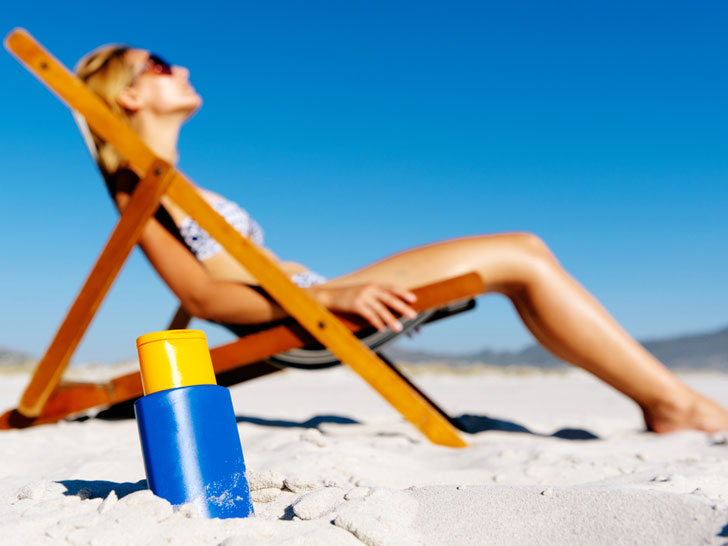
Protecting Your Skin From the Sun


 Protecting Your Skin From the Sun


Protecting your skin

Most skin cancer can be prevented. Use the following tips to protect your skin from the sun. You may decrease your chances of developing skin cancer and help prevent wrinkles.

Although people with darker skin don't sunburn as easily, they can still get skin cancer. So it's important to use sun protection, no matter what your skin colour is.

Avoid sun exposure


The best way to prevent a sunburn is to avoid sun exposure.

Stay out of the midday sun (from 11 in the morning to 4 in the afternoon), which is the strongest sunlight. Find shade if you need to be outdoors. You can also calculate how much ultraviolet (UV) exposure you are getting by using the shadow rule: A shadow that is longer than you are means UV exposure is low; a shadow that is shorter than you are means the UV exposure is high.

Other ways to protect yourself from the sun include wearing protective clothing, such as:
Hats with wide 10 cm (4 in.) brims that cover your neck, ears, eyes, and scalp.
Sunglasses with UV ray protection, to prevent eye damage.
Loose-fitting, tightly woven clothing that covers your arms and legs.
Clothing made with sun protective fabric. These clothes have a special label that tells you how effective they are in protecting your skin from ultraviolet rays.

Preventing sun exposure in children

You should start protecting your child from the sun when he or she is a baby. Because children spend a lot of time outdoors playing, they get most of their lifetime sun exposure in their first 18 years.

  • It's safest to keep babies younger than 12 months out of the sun. Do not use sunscreen on babies younger than 6 months old.
  • Teach children the ABCs of how to protect their skin from getting sunburned.
    • A = Away. Stay away from the sun as much as possible from 11 in the morning until 4 in the afternoon. Find shade if you need to be outdoors.
    • B = Block. Use a sunscreen and lip balm with a sun protection factor (SPF) of 30 or higher to protect babies' and children's very sensitive skin.
    • C = Cover up. Wear clothing that covers the skin, hats with wide brims, and sunglasses with UV protection. Even children should wear sunglasses with UV protection.

Sunscreen protection

If you can't avoid being in the sun, use a sunscreen to help protect your skin while you are in the sun.
Be sure to read the information on the sunscreen label about its SPF value and how much protection it gives your skin. Follow the directions on the label for applying the sunscreen so it is most effective in protecting your skin from the sun's ultraviolet rays.

Choosing a sunscreen

  • Sunscreens come in lotions, gels, creams, ointments, and sprays. Use a sunscreen that:
  • Use lip balm or cream that has SPF of 30 or higher to protect your lips from getting sunburned.
  • Take extra care to protect your skin when you're near water, at higher elevations, or in tropical climates.
Some sunscreens say they are water-resistant or waterproof and can protect for about 40 minutes in the sun if a person is doing a water activity.

Applying a sunscreen

  • Apply the sunscreen at least 15 to 30 minutes before going in the sun.
  • Apply sunscreen to all the skin that will be exposed to the sun, including the nose, ears, neck, scalp, and lips. Sunscreen needs to be applied evenly over the skin and in the amount recommended on the label. Most sunscreens are not completely effective because they are not applied correctly. It usually takes about 30 mL (1 fl oz) to cover an adult's body.
  • Apply sunscreen every 2 to 3 hours while in the sun and after swimming or sweating a lot. The SPF value decreases if a person sweats heavily or is in water, because water on the skin reduces the amount of protection the sunscreen provides.

Other sunscreen tips

The following tips about sunscreen will help you use it more effectively:

  • If your skin is sensitive to skin products or you have had a skin reaction (allergic reaction) to a sunscreen, use a sunscreen that is free of chemicals, para-aminobenzoic acid (PABA), preservatives, perfumes, and alcohol.
  • If you are going to have high exposure to the sun, consider using a physical sunscreen, such as zinc oxide, which will stop most of the sunlight from reaching the skin.
  • If you need to use sunscreen and insect repellent with DEET, do not use a product that combines the two. You can apply sunscreen first and then apply the insect repellent with DEET, but the sunscreen needs to be reapplied every 2 hours.
Do not use tanning booths to get a tan. Artificial tanning devices can cause skin damage and increase the risk of skin cancer. If you want your skin to look tan, try a sunless tanning cream or spray that makes your skin look tan. And keep using sunscreen when you are in the sun.
For information on sun exposure and vitamin D, why not book an appointment at Britannia - The Enclave. They’ll be able to give you top tips and make sure you get the right sunblock for your skin.


Make an appointment by calling 0925-567-5329 • 0908-865-5662 • 0917-566-1932 • 458-0717 and schedule a consultation today.


Visit us at BRITANNIA MEDICAL CENTER - The Enclave
Enclave Complex, Fil-Am Friendship Road, Angeles City.
britanniamed@gmail.com || www.britanniamedicalcenter.ph || britanniamedicalcenter.blogspot.com

Monday, May 15, 2017

Is Fluoride Bad for Toddlers?


Is Fluoride Bad for Toddlers?


For years, the ADA recommended that parents wait until age 2 to start using fluoride toothpaste with their children. However, that recommendation changed in February 2014, when the organization said parents can begin using a “smear” of fluoride toothpaste as soon as teeth begin to show.

Why would the ADA change its mind after decades of a standard policy? What does it mean for your children?

Is Fluoride Bad for Toddlers?

A Little Background on Fluoride

Fluoride is an effective way to prevent and even reverse the early signs of tooth decay. It makes the tooth structure stronger, so teeth are more resistant to acid attacks.

Many of us take in fluoride naturally through the water we drink, but not all parts of the country require that fluoride be part of the drinking water, and more and more families are choosing bottled water, which in most cases does not contain fluoride like tap water does.

Groups like ADA have long recommended brushing teeth and seeing a dentist as early as age 1, but parents tend to be undereducated in this area or they give in to toddlers who do not like brushing their teeth.


Make an appointment by calling 0925-567-5329 • 0908-865-5662 • 0917-566-1932 • 458-0717 and schedule a consultation today.

Visit us at BRITANNIA MEDICAL CENTER - The Enclave
Enclave Complex, Fil-Am Friendship Road, Angeles City.
britanniamed@gmail.com || www.britanniamedicalcenter.ph || britanniamedicalcenter.blogspot.com

Monday, April 17, 2017

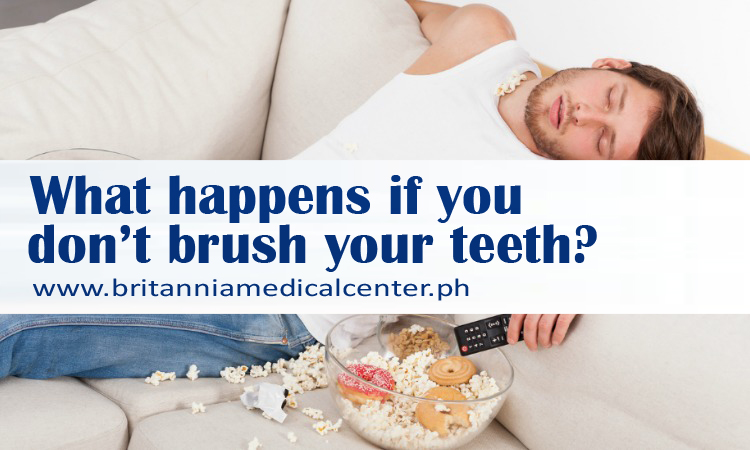
What happens if you don’t brush your teeth?

What happens if you don’t brush your teeth?


Easter, school holidays and lots of long Bank Holiday weekends to look forward to…not to mention a few late nights for all the family.
Besides, how much harm could not brushing your teeth do?
If that sounds familiar, you might want to think again.

When you don’t brush your teeth this is what happens

The bacteria in your mouth grows, taking its turn to have its own feast while you get some shut-eye – breeding on all you were eating last night and through the day.
With no toothpaste or toothbrush to clear it away, plaque builds up, which in time can cause tooth decay.
It also causes inflammation, which can lead to bleeding gums – a sign of gum disease – and eventually much worse: tooth loss.
What’s more, your breath will smell. Pretty bad in fact! If we don’t brush twice a day, floss and use mouthwash or drink water regularly, we’re leaving bacteria there to multiply as it breaks down those foods and sugars left on our teeth. Of course that’s going to smell!
But even if you think it’s just once and you’ll brush straight away in the morning – there’s another thing: your teeth have missed out on a key chance to repair themselves properly.
Just as you need sleep to help your brain function and cells repair, your teeth also need regular doses of fluoride to help them remineralise – and the best time they can do this is through the night. Without fluoride toothpaste, they can’t do a proper job of healing themselves.
Not to mention the long-term effects of not brushing. Over time, build-up of plaque has been linked to heart disease and strokes. Just one more reason to maintain a healthy mouth!
Are you alone? No!
While sometimes we can be caught short without a toothbrush, it’s always best to brush your teeth twice a day and change your toothbrush every 2-3 months.
So if you’re considering skipping the brushing, do your mouth a favour and remember: it only takes 2 minutes – your bed will still be where you left it!

Think your dental hygiene could do with some improvement?

Why not book an appointment at Britannia - The Enclave. They’ll be able to give you top tips and check to make sure you’re brushing correctly.
 
Make an appointment by calling 0925-567-5329 • 0908-865-5662 • 0917-566-1932 • 458-0717 and schedule a consultation today.

Visit us at BRITANNIA MEDICAL CENTER - The Enclave
Enclave Complex, Fil-Am Friendship Road, Angeles City.
britanniamed@gmail.com || www.britanniamedicalcenter.ph || britanniamedicalcenter.blogspot.com


Friday, March 17, 2017

Summer Snacks that Are Harming Your Teeth


Summer Snacks that Are Harming Your Teeth


    During the warm summer months, there are tons of yummy foods available for us to snack on – fresh fruit, delicious salads, and mouthwatering barbecue. But not all of these foods are healthy for your teeth. At Britannia - The Enclave, we’d like to talk about smile-friendly summer snacks.

As we all know, limiting the amount of sugary foods and drinks we consume is important for dental health. In the summertime, many people are quick to turn to soda, sweet tea, and sports drinks to quench their thirst. While most of these can succeed at making us less thirsty, they can also contribute to tooth damage. Instead of choosing all the sugary options available, opting for water is a smarter decision that your smile will thank you for. If you must have a soda or sports drink, try drinking it with a straw to limit how much of the liquid gets on your teeth.

Another popular beverage of choice during the summer is iced coffee. Regular morning coffee drinkers tend to drink more iced coffee when the weather is hot. The problem is that iced coffee isn’t typically just enjoyed in the morning, but rather throughout the day. By doing this, you’re increasing the amount of time your teeth are exposed to the sugar and acid, and allowing the opportunity for more damage to occur as well as staining.

Even though citrus foods are delicious, they aren’t the best snacking choices for a strong and healthy smile. Fruits like oranges, grapefruits, lemons, and limes are extremely acidic. The acid in these foods can damage tooth enamel which can eventually lead to decay and cavities. A good way to avoid this damage is to rinse with water after eating an acidic fruit. The water will neutralize that acid and it won’t have a chance to harm your teeth.

One last smile-damaging snack of summer is barbeque. This doesn’t mean you have to completely avoid all cookouts this year, it just means that all of us at Britannia - The Enclave encourage you to moderate the amount of barbeque you eat, specifically the sauce. Barbeque sauce is acidic, and as we’ve already covered above, acid is bad for your teeth. Not only that, the dyes used in many sauces can cause discoloration.

So instead of loading up on fruits, soda, and barbeque sauce this summer, make more smile-conscious choices like fresh vegetables, water, and calcium-rich cheese. Not only will your summer snacks taste awesome, it will make your dentist in Clinton Township, and your smile, happy.


Want more information?
 Visit us at BRITANNIA MEDICAL CENTER - The Enclave
Enclave Complex, Fil-Am Friendship Road, Angeles City.
britanniamed@gmail.com || www.britanniamedicalcenter.ph || britanniamedicalcenter.blogspot.com
Thursday, March 16, 2017

An Expert Guide to Gorgeous Summer Skin

An Expert Guide to Gorgeous Summer Skin


Summers are kind, but only to your wardrobe. Florals and fluorescents make a smashing comeback and jeans and pants pave way for skirts and shorts. But when it comes to your skin, summers are the biggest threat. The dry, humid heat leaves you with stretchy, leather-like, patchy skin, and huge pores.

 So give your skin the care it truly deserves. Here are some tips, tricks that will give your harsh and dull skin an instant uplift.


Exfoliate. Since we’re showing off so much more skin in the summer months, we want it to be soft and smooth. Keep in mind that exfoliation reveals new skin that is more prone to sunburn. Reserve your exfoliation for the evening or for days when you aren’t heading straight from the shower to the beach.
Fight body acne. Many people are prone to acne in the summertime. If you’ve got some on your face, arms and/or back, consider an acne-fighting body wash to help clear it up.
Use sunscreen. Apply a broad-spectrum sunscreen with an SPF of 30 or higher at least 30 minutes before heading outdoors. If you’re outside all day, reapply at least every two hours; and every 80 minutes if you’re sweating or swimming. Remember, the number-one cause of premature aging is sun damage.
Stay moisturized. Moisturizing in the summer is just as important as moisturizing in the winter. Apply a light moisturizer to protect your skin from summertime drying agents like sunburns, salt and chlorine.
Hat head. Wearing a hat is a fun and functional way to protect your head and face from the sun’s harmful rays, and they can really ramp up your summer style. Think of your hat as an umbrella for your head! Make sure you choose something with a brim that’s large enough to keep the sun off of your face and neck.
Hydrate. Drinking water is so important during the summer. Not only will it help clear out acne, but it will also keep your skin looking fresh and youthful. And remember, as Dr. Murad says, “eat your water” in the form of water-rich fruits and vegetables.
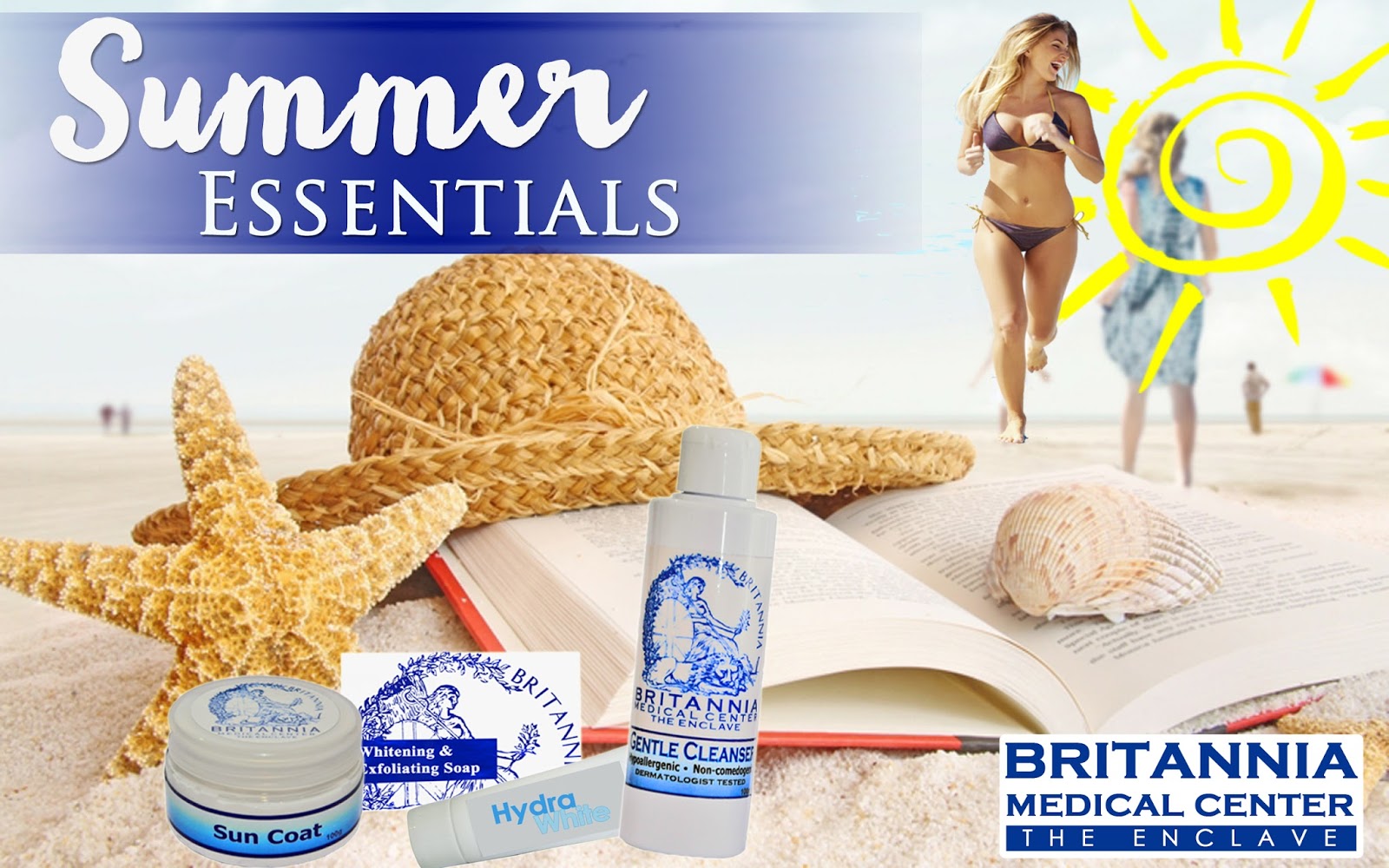
Check out Britannia - The Enclave summer essentials to make your skin glow as ever this summer!

Visit us at BRITANNIA MEDICAL CENTER - The Enclave
Enclave Complex, Fil-Am Friendship Road, Angeles City.
0925-567-5329 • 0908-865-5662 • 0917-566-1932 • 458-0717
britanniamed@gmail.com || www.britanniamedicalcenter.ph || britanniamedicalcenter.blogspot.com

Wednesday, March 1, 2017

5 Dental Tips for When You Go on a Vacation

5 Dental Tips for When You Go on a Vacation


Your toothbrush – don’t leave home without it

Stick to your routine — continue to brush your teeth at least twice per day and floss daily. Carry travel-sized packets of floss or dental picks in your purse or pocket if you’ll be out for most of the day. If you’re travelling, a collapsible toothbrush and a roll of floss fit nicely into your purse or carry-on luggage. If you have a cottage, stock up on toothbrushes, floss and toothpaste for the season.

Be prepared

Do your research before your trip on the dental care available in the area where you will be staying. Get the details of BRITANNIA - THE ENCLAVE for more information on office hours. This will save you precious time in case of a dental emergency.

Eat healthy

Indulging in sweet and sticky foods while on vacation may be fun, but try to minimize the amount you consume. Keep those s’mores around the campfire to a minimum. Best bet? Stick to fruits and vegetables as they contain the essential vitamins and minerals teeth and gums need to stay strong and healthy.

Drink plenty of water, every day. It is the best way to stay hydrated, no matter if you’re sitting on a beach or hiking in the hills.

Beware the rays


Moderate exposure to sunlight is the best natural source of vitamin D, which is used by the body to absorb calcium and phosphorous, helping to keep teeth and bones strong. However, prolonged exposure to the sun can increase your risk of cancers, including to the lips and the mouth.
Want more information?
 Visit us at BRITANNIA MEDICAL CENTER - The Enclave
Enclave Complex, Fil-Am Friendship Road, Angeles City.
britanniamed@gmail.com || www.britanniamedicalcenter.ph || britanniamedicalcenter.blogspot.com