Friday, May 22, 2015

Get Educated and Get Involved!

Skin Cancer : What you Need to Know?


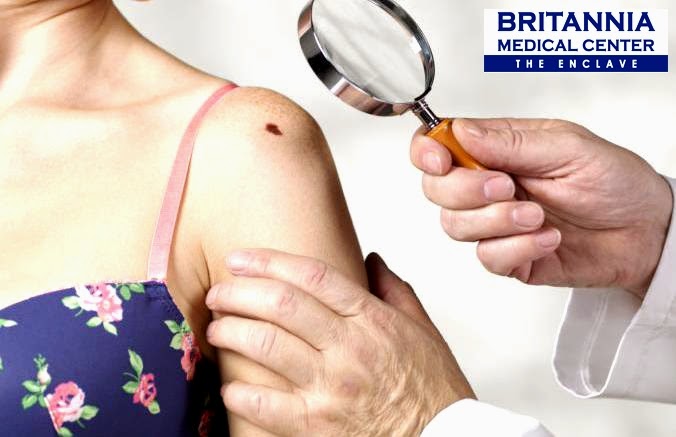
May is National Skin Cancer Awareness Month and this time of year brings skin, our body’s largest organ, into focus as the  weather warms up and people spend more time outside in the sun. Skin cancer is sometimes referred to as a “lifestyle disease” because its occurrence can be dramatically reduced through behavior modification, education, and early detection. Learning more about the disease and how it can be easily prevented and/or treated if found early, will hopefully inspire our readers to make some positive lifestyle changes and reduce their risk of skin cancer.


What is skin cancer exactly? Skin cancer is defined as the uncontrolled growth of abnormal skin cells. It occurs when unrepaired DNA damage to skin cells, most often caused by ultraviolet radiation from sunshine or tanning beds, triggers mutations, or genetic defects, that lead the skin cells to multiply rapidly and form malignant tumors.

Cancer of the skin is often divided into two categories: non-melanoma and melanoma.  Melanoma, the more-serious form of skin cancer, is the most common form of cancer for young adults 25-29 years old and the second most common form of cancer for young people 15-29 years old. Furthermore, women aged 39 and under have a higher probability of developing melanoma than any other cancer except breast cancer, and up until age 40, significantly more women than men develop melanoma.

Current statistics show that skin cancer is the most common type of cancer in the United States, as well as some other countries, and unfortunately the incident rate continues to rise.  Although the frequency of melanoma and non-melanoma skin cancer diagnoses indicate that this disease remains a significant health concern, it’s important to note that, research and public awareness campaigns are promoting prevention and early detection of skin cancer. 


Here are eight tips from Britannia Medical Center-The Enclave on how to reduce your risk of getting skin cancer:
  • Seek the shade, especially between 10 AM and 4 PM when sun's rays are strongest.
  • Do not burn. A person’s risk for melanoma doubles if he or she has had five or more sunburns at any point in life.
  • Avoid indoor tanning. UV radiation from tanning devices is now known to cause skin cancers. Those who make just four visits to a tanning salon per year can increase their risk for melanoma by 11%.
  • Cover up. Clothing can be your most effective form of sun protection, so make the most of it with densely woven fabrics. Also don't forget to don a broad-brimmed hat and wear UV protective sunglasses.
  • Use a broad-spectrum (UVA+UVB) sunscreen with an SPF of 30 or higher every day. For extended outdoor activity, use a water-resistant sunscreen and reapply throughout the day.
  • Keep newborns out of the sun. Sunscreens may be used on babies over the age of six months, but they should also be protected by shade and clothing. Children are very sensitive to ultraviolet radiation—just one severe sunburn in childhood doubles the chances of developing melanoma later in life.
  • Examine your skin head-to-toe every month. While self-exams should not replace the important, annual skin exam performed by a dermatologist, they offer the best chance of detecting the early warning signs of skin cancer. If you notice any change in an existing mole or discover a new one that looks suspicious, see a dermatologist immediately.
  • See your Board Certified Dermatologist every year for a professional, full skin exam. Britannia Medical Center-The Enclave can help you. For more information call us at 0925-567-5329 • 0908-865-5662 • 0917-566-1932 • 458-0717 and schedule a consultation today.

Thursday, May 21, 2015

OVERCOMING DENTAL FEARS WHILE ACHIEVING A CONFIDENT SMILE


Dental Phobia: Overcoming Fear of Dentists


          Maybe you have some nightmares of past dentistry procedures or your childhood dentist was just plain scary. Whatever the case, you’re not alone. Approximately 40 million people avoid the dentist because of dental phobia. This can cause a major problem if you run into dental complications. 

At Britannia Medical Center,-The Enclave we understand that many people do have dental phobias, making regular appointments difficult. No matter the age, we help tend to every patient and ensure a pain-free dental experience. Our objective is to make you feel comfortable and relaxed, so you’ll have less fear and anxiety for your next visit.


Common Dental Phobia Fears

There are a number of fears people with dental phobia experience and first and foremost it is important to address those issues and shed some light on them. We found some common fears and easy solutions!
  • Many experience the fear of pain. The mouth is an area that is protected and unexposed to outside factors. So, a dentist working in that area might seem invasive and unnerving to the patient.
  • Sometimes people are embarrassed by the condition of their teeth and are too afraid to address the issue.
  • Often times, people are uncomfortable with keeping their mouth open for an extended period of time, which produces the fear of loss of control and helplessness.
  • Not all dentists are friendly. Some patients have had bad experiences with dentists because some don’t take their dental phobia seriously. Not only can these dentists cause pain, but they can come across as unfriendly. (Don’t worry, our dentists have the best personalities!)
  • Some people have a fear of the dentist due to listening to others who fear the dentist. Dental phobia can be caused vicariously through someone that influences another. A child might hear scary stories of the dentist through a parent which intimidates the child to visit the dentist.
 These are just some common dental phobia fears people have. There may be other issues that cause people to veer away from dentists. No one wants to live in fear. That’s why it is important to discuss this with your dentist to find the right solution for you.


Overcoming Dental Phobia

Dental phobia is a psychological anxiety, so changing the way you think or the way you feel can drastically reduce the severity of your phobia.
  • First, choose a dentist that’s right for you and understands your dental phobia. At Britannia Medical Center-The Enclave, our dentists and staff take this into concern and help you gain comfort and confidence. We can also introduce you to our state-of-the-art technology that provides pain-free and nonintrusive dentistry.
  • Identify your fears and weigh them out. Are these fears unrealistic or realistic? What type of treatment options are available to suit your needs? Also communicate with your dentist first, so they can create a plan that’s right for you.
  • Seek help. You are not the only one to suffer from dental phobia. So, researching help online or seeking advice from doctors and psychologists can ease your anxiety.
  • Before a dental appointment, eating high-protein foods can help calm you. You don’t want anything with sugar or caffeine because that can make you feel a bit jumpy. Also take deep breaths and practice relaxation.
  •  
 No matter the case, we can help. Feel free to discuss it with one of our professional and experienced staff members. We want to work with you to stay healthy and happy! For more information call us at 0925-567-5329 • 0908-865-5662 • 0917-566-1932 • 458-0717 and schedule a consultation today.


Wednesday, May 20, 2015

5 Simple and Easy Ways to Keep Your Heart Healthy

Shield your heart like a pro with these tips from heart doctors about what they do to keep their own hearts functioning and healthy.


Jennifer H. Mieres, M.D., is a clinical nuclear cardiologist at North Shore-LIJ Health System in Great Neck, New York.

I make sure to laugh every day—it reduces blood pressure. I DVR sitcoms like Modern Family, and if I see a movie, I'll always choose a comedy. Music is another heart aid because it lowers stress hormones like cortisol. Katy Perry or Pitbull tunes always make me smile.


Maja Zaric, M.D., is a WH advisor and interventional cardiologist at Lenox Hill Hospital in New York City.

Women's hearts handle stress differently than men's do, so we need to be proactive about relaxing. Like most people, I have limited downtime, so when I'm with friends or family, I turn off my cell. Being "out of touch" allows me to really unwind and find a true sense of peace.


Patricia Vassallo, M.D., is a cardiologist at Northwestern Memorial Hospital in Chicago.

I have a family history of heart disease, so eating well is key. Diet is central to preventing problems. I try to eat a salad almost every day—avocado, tomatoes, chicken, olive oil, and vinegar on a bed of lettuce. I have a piece of fruit with every meal. A square of 70 percent dark chocolate is my treat.


Madalina Petrescu, M.D., is a cardiologist at Swedish Medical Center in Seattle.

I used to take pride in barely sleeping. But we know now that lack of sleep ups the risk for heart disease. With kids and a busy career, it's hard for me to get my seven hours. So I cut out TV and Web surfing on weeknights; I can catch up on them on weekends.


Martha Gulati, M.D., is a cardiologist at The Ohio State University Wexner Medical Center in Columbus.

I trained my high-energy dog to love running. He doesn't take a day off, so neither can I. If you don't like running, you can swim, bike, anything! Exercise is medicine, and you need your daily dose--moving strengthens your heart.

Sunday, May 17, 2015

7 Weird and Wonderful Health Tips from around the Globe


Here’s our round-up of the best - if sometimes quirky - health advice from overseas.

Country: Spain
Try: Siestas


Spaniards have long known a nap after lunch was good for them, but Spanish scientists proved it in 2012. The Spanish Society of Primary Care Physicians found a short sleep of no more than half an hour after lunch could reduce stress, help cardiovascular functions, and improve alertness and memory. 
You can’t nod off in a bed though, as this will encourage a deeper sleep, and if you snooze for too long then you won’t sleep at night. Also, you’ll only see the benefit if you have a siesta every day.

Country: Finland
Try: Saunas


Most homes in Finland come with their own in-built sauna, and the Finns already know they’re sweating away toxins every time they step inside. A recently published study of men in Finland, however, found that those using the sauna every day were also less likely to die of heart problems than those who went just once a week.
Scientists followed more than 2,000 men for 20 years and discovered that the more often the men went to the sauna, and the longer they stayed, the lower their risk for sudden cardiac death, fatal coronary heart disease and fatal cardiovascular disease.

Country: Japan
Try: Shoku-iku


Meaning 'food education', the idea of eating consciously was pioneered alongside macrobiotics in the late 1800s by military doctor Sagen Ishizuka, who believed the secret to health and healing was to strengthen the body from the inside.
In 2005, the Basic Law of Shoku-iku was passed in Japan, making nutrition education compulsory. British-based chef Makiko Sano’s recipe book Shoku-iku! explains how the Japanese make dishes to share at dinner from five food groups (grains, vegetables, fruits, dairy and protein) which appeal to your five senses.

Country: France
Try: Slowing down


As Mireille Guiliano, the former President and CEO of champagne company Clicquot, attests in her book, French Women Don’t Get Fat.
Why? Well they don’t do crash diets for a start. Instead, they adopt a new lifestyle over a longer period. “If you believe you can shed pounds quickly by force of will and deprivation, you will in all likelihood not only regain the ones you have lost but add a few more besides,” she says. “A proper recasting, resetting your body's dials, is a three-month affair. The key is to make it a pleasant three months.”

Country: Russia
Try: Rhodiola Rosea


The Russians have a go-to herb they rely on to treat everything from altitude sickness to depression and infections. R. Rosea, aka golden root or arctic root, is a perennial flowering plant that grows high up in the Arctic and is known to be an ‘adaptogen’, which helps the body adapt to stress – and is thought to boost mood and reduce fatigue.
It’s available in supplement form from health food shops.

Country: Sweden
Try: Fika


In Sweden, fika means ‘to have coffee’ with friends – and it’s a tradition that’s been around since the 1700s. Companies build in special coffee breaks, where employees head to cafés at around 10am and 3pm to have coffee or tea with a pastry and discuss work.
The health benefits of regular screen breaks on your eyes and back are well known, but spending time chatting with friends also promotes wellbeing, with a recent study finding that those who stopped to socialise during the day were 10 to 15% more productive than those who didn’t.

Country: Holland
Try: Cycling


OK, so it’s not like the Dutch own cycling, but they certainly do it the most – with each person in Holland pedalling an average of 1.5 miles a day. A study in 2010 of Dutch drivers found they’d live as much as 14 months longer if they switched to cycling for short trips rather than relying on the car.
The exercise is known to reduce the risk of heart disease, diabetes and certain cancers - if you do it at least three times a week for 30 minutes. On your bike!

http://home.bt.com/lifestyle/wellbeing/health-tips-from-around-the-world-11363974089097

Friday, May 15, 2015

8 Ways to Improve Your Respiratory System Health


Each and every day, we breathe in and out about 20,000 times. All this breathing uses every aspect of the respiratory system: the nose, throat, voice box, windpipe, and lungs. Many factors including genetics, smoking, pollutants, irritants, and infectious diseases can cause your lungs to develop problems and age faster than normal. If the air you breathe is dirty or polluted, your respiratory system will filter out the toxins… but only if your respiratory system is healthy.
The good news is that damage to your respiratory system is often not permanent, and can actually grow healthier and stronger with age.
Here are 8 ways to improve your respiratory system health.

1. Increase Your Walking Speed
Right now I’m going to talk specifically about the simple act of walking, but not just a little stroll down the street. How fast—or how slowly—you normally walk may predict how long you’ll live, according to a study published in the Journal of the American Medical Association. In this particular study, researchers clocked the walking speed of more than 34,000 people, age 65 years and older.
The subjects who averaged 2.25 mph or faster lived longer than those who walked more slowly. Now, I’m not necessarily saying this means that if you increase your walking speed you’ll automatically live longer. More importantly, if you notice you simply can’t speed up, that could be an indicator that you have an underlying health issue. Try picking up your walking speed and if you find yourself really struggling, have a talk with your doctor about what may be going on.

2. Maintain a Healthy Weight
Excess weight puts more stress on your lungs and compresses all respiratory muscles, making them work harder and less efficiently. Make sure your diet is nutritionally sound, easy to follow, and most importantly, that it works so you can maintain a healthy weight. Whatever nutrition and exercise program you choose, take it seriously and lose the extra pounds.

3. Stay Hydrated
Drinking plenty of water every day helps maintain a healthy weight and gives a thin consistency to the mucus lining your airways and lungs. Dehydration can cause that mucus to thicken and get sticky, which slows down overall respiration and makes you more susceptible to illness.

4. Avoid Smoking and Smokers Lungs
Smoking damages lung and respiratory health by inducing inflammation, speeding oxidative stress in respiratory cells, and even causing cell death, potentially taking you down the road toward emphysema, chronic lung disease, chronic bronchitis, and lung cancer. It is important to quit smoking and avoid having smokers lungs as you age.
There are numerous methods to quit smoking. The trick is to keep trying until you find one that works for you. If you’ve tried to quit before, it’s time to try again, because the single best thing you can do for your lungs is to stop smoking. Smoking does great damage to your respiratory system, but the good news is that your damaged smokers lungs can actually be undone.
Remember, even if you’ve never picked up a cigarette, cigar, or pipe, you may still be breathing in an alarming amount of pollutants every day. So, strengthening your respiratory system is helpful even for nonsmokers because you’ll be armed against all possible invaders: allergens, bacteria, and viruses. Plus, you don’t want to be tethered to an oxygen machine when you’re 100 years old, do you? Strong lungs are a key component to overall good health as we age.

5. Take Supplements
Your lungs are highly sensitive to methylation, a process that, when balanced, occurs within the DNA of cells and prevents abnormalities in how DNA functions. When unbalanced, DNA methylation is serious business and can lead to cancer, including lung cancer.
To prevent serious lung diseases, we’ve got to make sure our bodies are methylating properly. To do this, make sure your multivitamin has at least 2.4 mcg of B-12, 1.3 mcg of B-6, and .4 mg folic acid per day. If not, you should add an extra B-complex supplement to your regimen.

6. Learn Yoga Breathing Techniques
Are you a shallow breather? You might be if most of your breaths come from your chest area. I suggest learning to take deep, long breaths, sending fresh oxygen deep into the bottom of your lungs. This not only helps your lungs function better, but it can also bring on a sense of calm. This can be quite renewing, and is excellent exercise for your lungs. Over time, it can help increase your lung capacity.
7. Challenge Your Lungs to Improve Your Respiratory System
Simple yet challenging exercises like breathing through a straw can improve your lung function by increasing your lung capacity. Overall, I want you to become more aware of your breathing so you can improve it over time and have strong lungs for a lifetime.

8. Consider Chiropractic Care
After having a chiropractic adjustment, many people comment along the lines of, “I feel like I’m taking in more air.” One study on over 5,000 people showed that chiropractic intervention improved overall breathing in 25% of the study participants.
I truly don’t want you to be on oxygen when you are much older; being tethered to a tank is no way to go about life, and our goal here is to help you feel fit and active when you’re 100 years old! By taking these simple steps earlier in life, you are setting yourself up for many years of healthier, heartier lungs. So to keep your respiratory system strong, don’t smoke and avoid smokers lungs, maintain a healthy weight, avoid exposure to pollutants, stay active, and eat healthful foods—all easy-to-follow lifestyle measures you can take to ensure a healthy, vibrant respiratory system.

http://www.drmikediet.com/health/8-ways-to-improve-your-respiratory-system-health-healthy-weight-walking-speed-smokers-lungs/